New Approaches to Machine Learning: Trends and Insights
Exploring innovative methods in machine learning.
As technology continues to evolve, the field of machine learning is experiencing a transformative phase driven by innovative methods and applications. Research indicates that these advancements are not only enhancing the capabilities of machine learning models but are also broadening their scope across various industries. This article explores some of the most significant trends and insights that are shaping the future of machine learning, providing a comprehensive overview for technology enthusiasts and professionals.

The Rise of Automated Machine Learning (AutoML)
One of the most notable trends in machine learning is the advent of Automated Machine Learning (AutoML). This approach seeks to simplify the machine learning process by automating the selection of algorithms, hyperparameter tuning, and model evaluation. Evidence suggests that AutoML can significantly reduce the time and expertise required to develop effective machine learning models, making these technologies more accessible to non-experts.
AutoML platforms are designed to handle various tasks, from data preprocessing to model deployment, enabling data scientists to focus on higher-level problem-solving rather than getting bogged down in technical specifics. As organizations increasingly adopt AutoML solutions, there is a growing emphasis on the need for transparency and interpretability in automated processes. This ensures that stakeholders can trust the decisions made by machine learning systems, fostering a more inclusive approach to data-driven decision-making.
Federated Learning: Enhancing Privacy and Collaboration
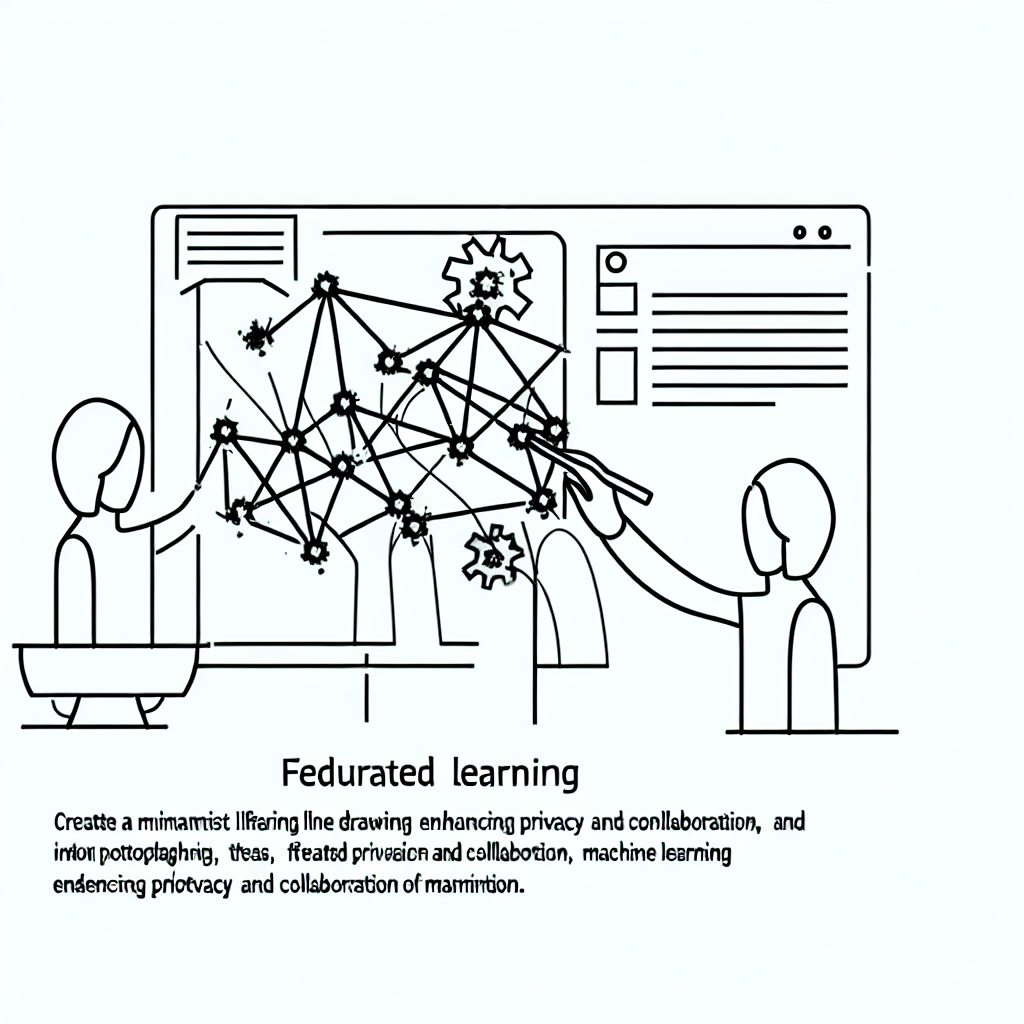
Another emerging trend in machine learning is federated learning, which addresses the critical issue of data privacy. In traditional machine learning, models are trained on centralized data servers, which can pose significant risks regarding data security and user privacy. Federated learning, on the other hand, allows for decentralized training where data remains on users’ devices. Instead of sending raw data to a central server, only model updates are shared, preserving the confidentiality of sensitive information.
This innovative approach is gaining traction in sectors such as healthcare and finance, where data privacy is paramount. By enabling collaborative learning without compromising individual data security, federated learning promotes a more ethical use of AI technologies. Research indicates that this method can enhance model performance by leveraging diverse datasets from multiple sources while adhering to stringent privacy regulations.
Explainable AI: Building Trust in Machine Learning Models
As machine learning systems become increasingly integral to decision-making processes, the need for explainability has never been more pronounced. Explainable AI (XAI) focuses on creating models that can articulate their reasoning and provide insights into their decision-making processes. This is particularly important in high-stakes applications, such as criminal justice or credit scoring, where understanding the rationale behind automated decisions is crucial.
Commonly, stakeholders demand transparency to foster trust in AI systems, and various techniques have emerged to enhance explainability. These include local interpretable model-agnostic explanations (LIME), SHapley Additive exPlanations (SHAP), and counterfactual explanations. By providing users with clear and understandable insights into how models operate, XAI contributes to more ethical AI deployment and encourages broader acceptance of machine learning technologies.
The Integration of Machine Learning with Edge Computing
The integration of machine learning with edge computing is another trend that is reshaping the landscape. Edge computing refers to processing data closer to its source rather than relying on centralized cloud servers. This approach is particularly beneficial for applications requiring real-time analytics, such as autonomous vehicles or smart devices in the Internet of Things (IoT).
By leveraging machine learning algorithms at the edge, organizations can reduce latency, enhance data privacy, and optimize bandwidth usage. This is especially relevant in scenarios where immediate insights are essential for performance, such as in healthcare monitoring or industrial automation. The convergence of edge computing and machine learning is expected to drive significant advancements in efficiency and responsiveness across various sectors.

The Future of Machine Learning: Trends to Watch
Looking ahead, several trends are poised to further influence the trajectory of machine learning. The increasing importance of ethical considerations in AI development is likely to become more pronounced, with a focus on ensuring fairness, accountability, and transparency in algorithms. Additionally, the growing demand for interdisciplinary collaboration between data scientists, domain experts, and ethicists will shape the development of more robust and responsible machine learning solutions.
Furthermore, as the field continues to evolve, the role of synthetic data in training machine learning models is expected to gain prominence. Synthetic data can help mitigate issues related to data scarcity, bias, and privacy concerns, offering a practical solution for building high-quality datasets. Overall, these trends signal a dynamic future for machine learning, characterized by continuous innovation and a commitment to ethical practices.